rival
app.
My role: UI design, sketching and prototyping
Tools used: Figma, Photoshop
Outcome: Created a fitness experience that reduces psychological friction, encourages consistent exercise, and supports user momentum through social engagement and automation.
Overview
Rival addresses a key challenge in fitness: users often fail before they start. Motivation fades, routines break, and the friction of planning, tracking, and accountability can prevent people from exercising at all.
Rival transforms exercise from a solo effort into a social, motivating, and rewarding system, making fitness approachable, habit-forming, and behaviorally supportive.
the challenge
Working out is physically difficult, but the real barrier often appears before the workout begins. Motivation fades, routines break, and the friction of planning workouts, tracking progress, and staying accountable can discourage users before they even start.
While many fitness apps focus on performance tracking, user research revealed deeper behavioral problems:
Missing a few sessions often leads to abandoning routines entirely
Gyms can feel intimidating or socially stressful
Planning and logging workouts is perceived as tedious administrative work
Manual tracking causes fatigue and disengagement
Goal: Design a mobile experience that lowers psychological barriers and supports sustained motivation
Research and discovery
To understand the problem space, I conducted market research on existing fitness apps and interviewed individuals who had either recently worked out or were trying to maintain a workout routine.
While many fitness apps focus on tracking performance, interviews revealed that users struggled more with sustaining motivation and consistency.
Several key insights emerged:
Motivation collapses after missed workouts
Users reported that missing a few sessions often led to abandoning their routine entirely. The psychological reset felt difficult, even when the user still wanted to exercise.
The gym environment can feel intimidating
Some participants described gyms as expensive, crowded, or socially intimidating. This discouraged beginners and people returning after a long break.
Fitness planning feels like work
Meal prep, calorie tracking, and workout logging were frequently perceived as administrative tasks rather than supportive tools.
Tracking fatigue is real
Many apps required too much manual input. Users wanted benefits without constant data entry.
These insights suggested something interesting:
Most apps optimize for serious athletes, but many users behave more like casual participants trying to maintain momentum.
That observation became the foundation for the design direction.
The goal of this project was to design a mobile experience that lowers the psychological barrier to exercise and helps users stay motivated over time.
Design hypothesis
Based on these insights, I developed several hypotheses.
Users would be more likely to maintain a workout routine if the product was:
flexible enough to adapt to different lifestyles
inclusive of different fitness levels and equipment
socially motivating without being intimidating
simple enough that tracking workouts felt effortless
and most importantly, fun, rewarding and psychologically supportive
The concept evolved into a fitness experience centered on friendly competition, accountability, and social encouragement.
Ideation
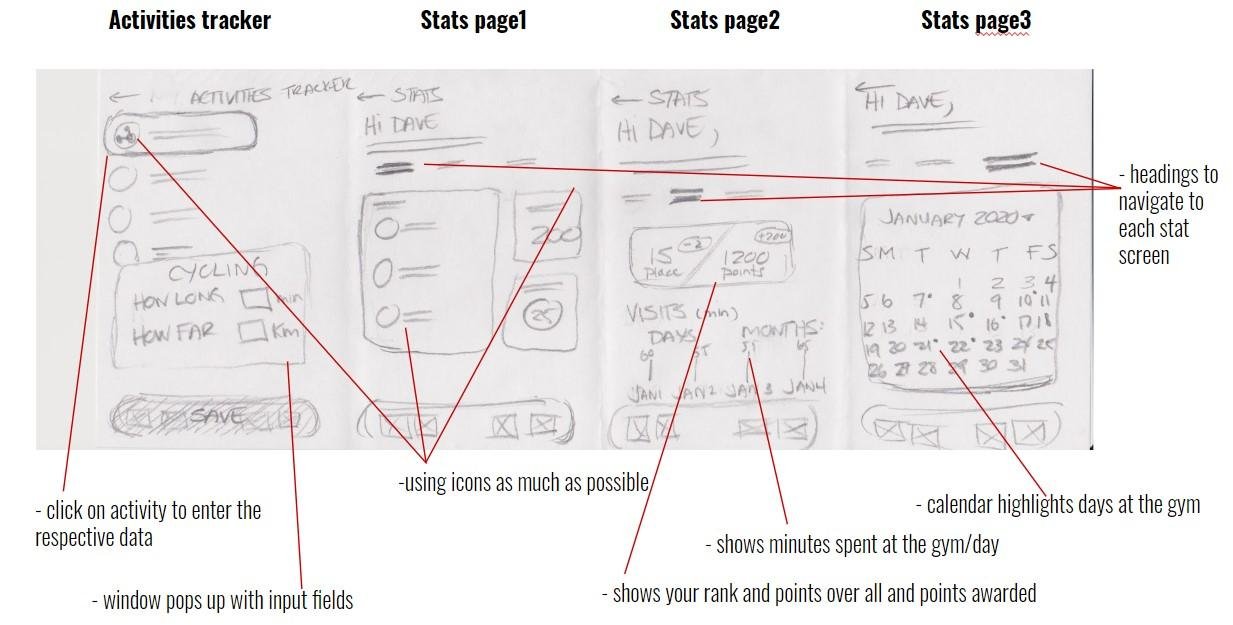
After synthesizing the research, I created user personas representing different motivation patterns and fitness levels. These personas helped guide ideation and prioritize features that reduced friction and increased engagement.
Early brainstorming explored several concepts including:
competitive challenges between friends
social workout groups
lightweight activity tracking
milestone rewards and recognition
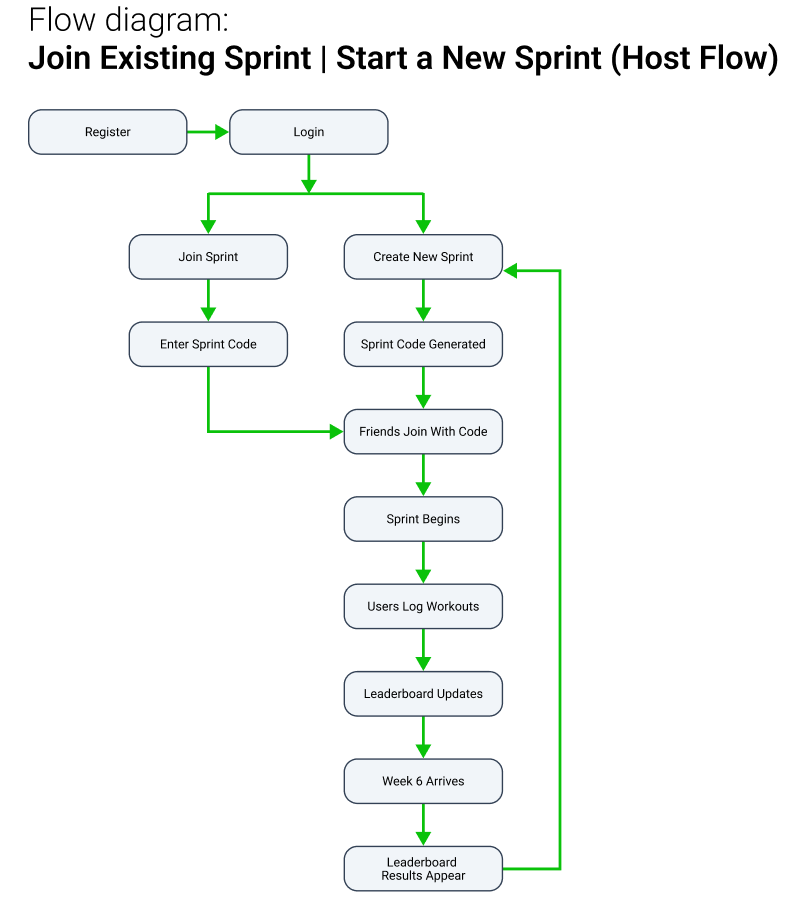
Initial ideas were translated into sketches and early user flows.
Iteration and testing
The early concept focused primarily on competing with friends through fitness challenges. During usability testing, however, an important discovery emerged:
Direct one-on-one competition discouraged some users
Community-based participation appealed to a broader audience
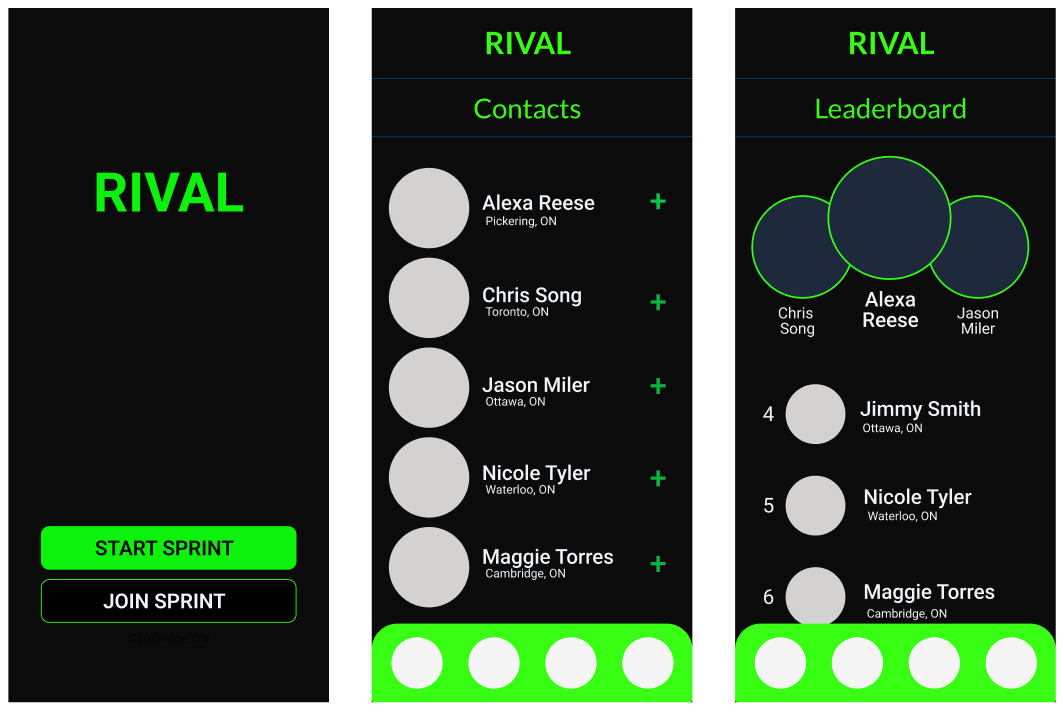
This insight led to a pivot in the design. Instead of limiting motivation to direct challenges, the app introduced interest-based workout groups such as running or cycling communities.
This change expanded the motivational model from simple competition to community-driven engagement.
Because the design system and flows were modular, the new feature could be integrated without redesigning the entire product.
The solution
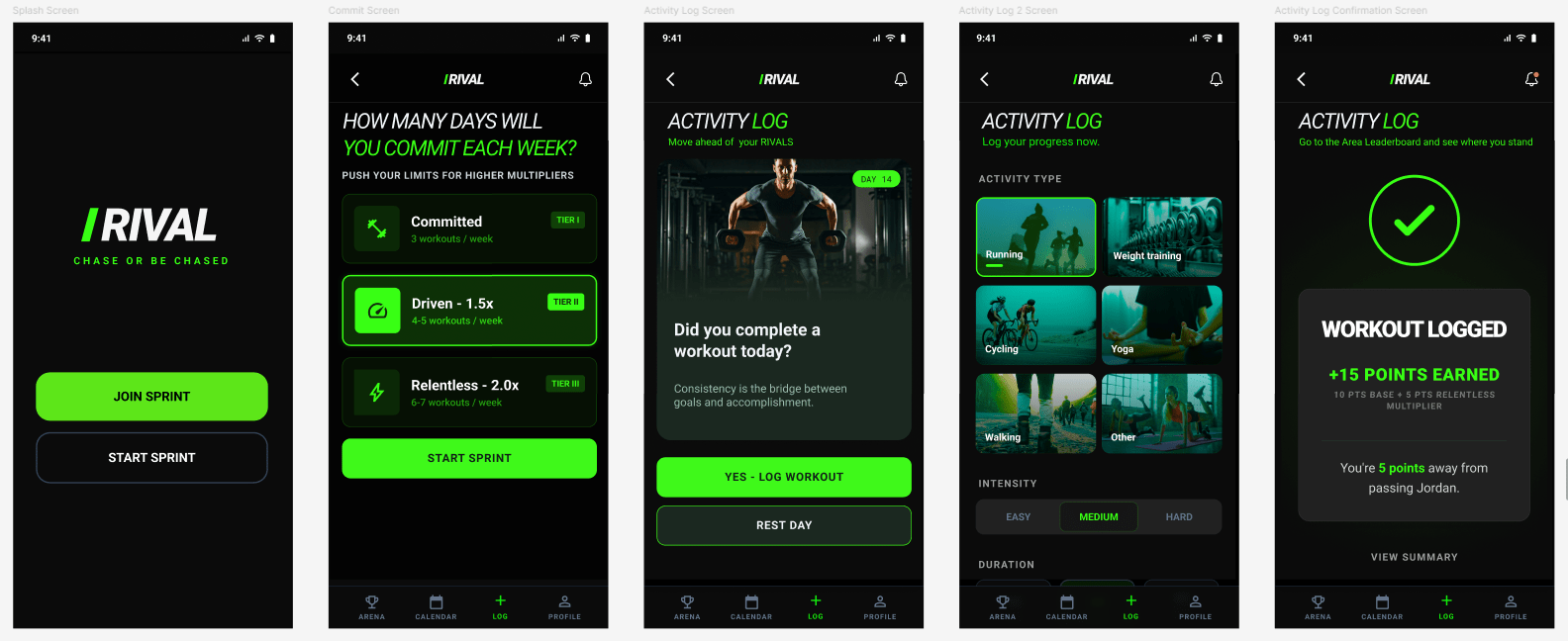
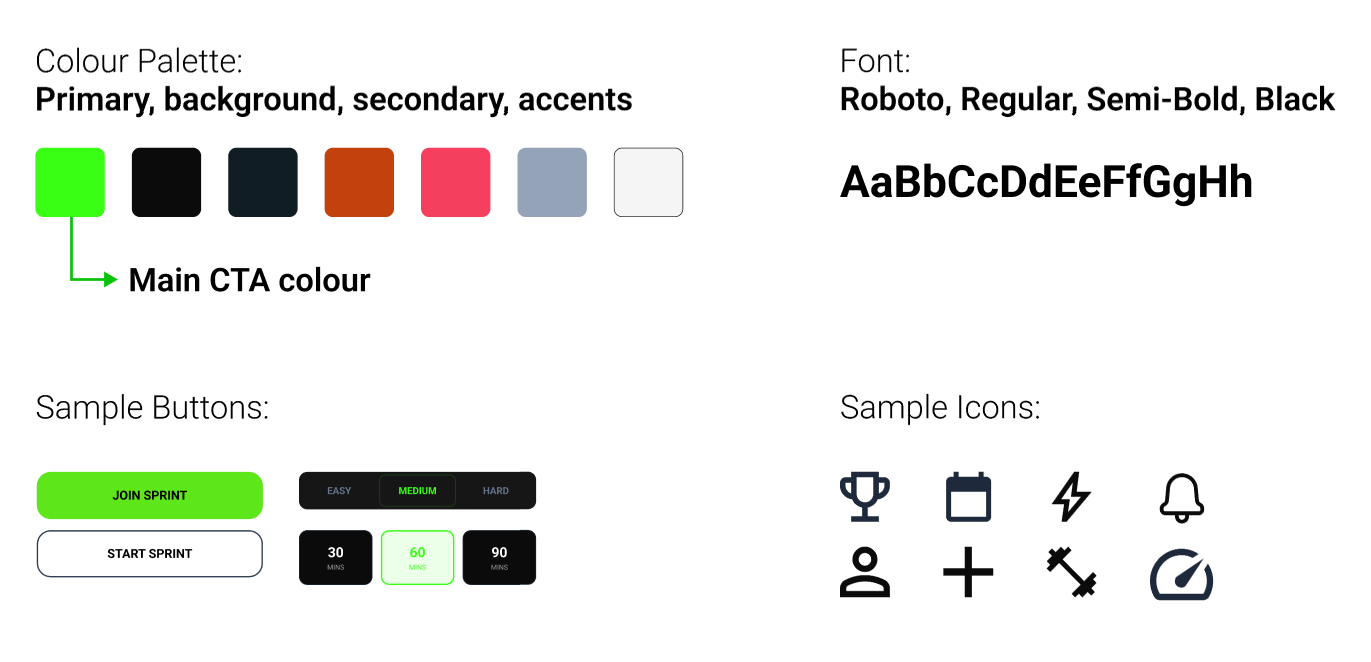
The final concept centers on motivating users through friendly competition, social accountability, and clear progress tracking.
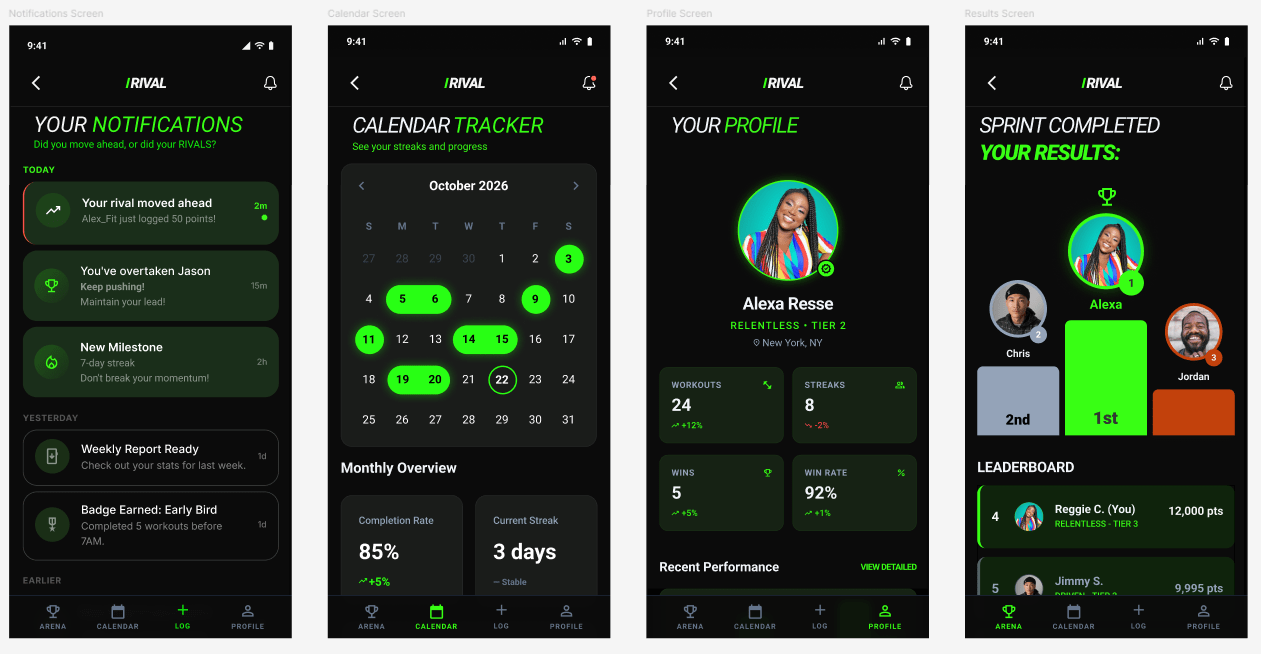
Key features include:
- A dashboard that highlights the most important daily fitness metrics and activities.
- A podium leaderboard where users can compare progress with friends and see who is leading a challenge.
- Sprint challenges where users can invite friends to compete in short-term fitness goals.
- Workout communities that allow users to join interest-based exercise groups.
- Automated Logging: Wearable detection of workouts reduces friction and preserves momentum
- Milestones and notifications that celebrate achievements and reinforce habit formation
Core Principle: Momentum matters more than perfection; Rival supports consistent behavior, not just optimal tracking.
Product value
The product encourages consistency by turning workouts into a shared experience.
It helps users:
stay motivated through friendly competition
track fitness progress without heavy manual input
connect with people who share similar fitness interests
build healthier habits through community support.
Learnings
This project reinforced an important UX lesson.
Users rarely abandon a product because of missing features.
They abandon it because the experience fails to support their behavior over time.
- Fitness apps often assume users have strong intrinsic motivation. In reality, motivation fluctuates. Designing for that fluctuation—rather than ignoring it—created a more supportive experience.
- The most valuable insight from this project was that momentum matters more than perfection. Helping users recover after missed workouts may be more impactful than helping them optimize a perfect routine.
Future opportunities
Several opportunities for future iterations emerged.
Meal and nutrition tracking to support broader health goals.
Sleep tracking to provide a more holistic view of wellness.
Integration with wearable devices to reduce manual tracking.